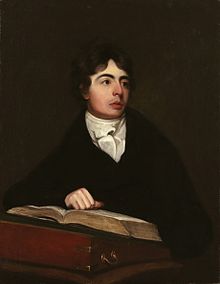
Wednesday, December 5, 2012

Childhood and Nature

“To more than infant softness, giving me, /Among the fretful dwelling of mankind. /A knowledge, a dim earnest of the calm/Which nature breathes among the field and groves?” (11-15).

Wordsworth begins the poem discussing childhood and the memories connected with it. In the quote above he seems to say that children, who are full of innocence, see the good in the things that occur but even when things go bad and are "fretful" nature is a place to escape that will help. The power of memory and the effect nature can have on it remains a strong theme for Wordsworth (think Tintern Abbey).

The power of not only remembering but of making the memory is quite important to Wordsworth. In this work he is remembering his childhood in the Lake District of England.

"And ye that are familiars of the lakes/And of the standing pools, I may not think/A vulgar hope was yours when ye employed/Such ministry"
As when he recalled the hill above Tintern Abbey here he is using his memory of the lake to make his life/situation better. Can nature really help ease the trials of life? Can a memory of some place you've been make a grey day better? I guess it all depends on where you've been and if you've any memories that are that strong.


Monday, December 3, 2012

Tintern Abbey 2.0

So while reading Prelude, I was struck with the same feeling that I did when I read "Tintern Abbey" for the first time.  I couldn't really place exactly what the feeling was until I got to line 298 that reads "There are in our existence spots of time / Which with distinct preeminence retain/ a fructifying virtue"  (298-290) and then read the footnote for line 294 that informs the reader that "Tintern Abbey" had been written six months prior.    "Tintern" focused more on trying to relive the experience in times of need, yet "Prelude" is more about the act of remembering and the memory itself.  I am a firm believer in the thought that the memory is more important than the actual experience because that is what you will refer back to for the rest of your life, and I feel like this poem better explains that thought.  I also really enjoyed the lines "It was in truth/ An ordinary sight, but I should need/ Colours and words that are unknown to man/ To pain the visionary dreariness" (319-322).  I've talked about it before in class, but everyone should have those awesome moments.  I don't mean "awesome" in the way that we use the word now, but in the way it was used during this time: something that induced awe.  If you were able to describe that experience then I feel that the value would be udnermined.  Those kinds of experiences shouldn't be shared.  They should be private, and I feel like that is what Wordsworth is trying to describe in this section of the poem.  Although I always walk away with more Wordsworth insight after we break it down better in class.

Wordsworth train of thought

While reading the Prelude, I found myself very scatter brained. I do like the fact that Wordsworth explains the feelings that we have during an experience are connected to the objects in which our memory holds on to. Wordsworth says, " Far other feelings were attached- with forms that yet exist with independent life, and, like their archetypes, know no decay." He talks about certain memories he has in his life that he began to connect those feelings with the objects around him to remind him of how he felt and the obstacles he had throughout his life. Wordsworth elaborates that there is times in our lives that have virtue, even bad memories. Our moods change by our good and bad experiences, but the imagination lightens the bad experiences. He begins to talk about how, "The mind of a man is fashioned and built up even as a strain of music", signifying that he believed that the mind is made up with parts and experiences like music, meaning that there is a rhythm to the way that people think. He also mentions again how Nature is what makes our mind at peace and harmony.

Connections to Nature

Wordsworth has a very dramatic way of describing his walks through the woods. I agree with Desdemona that this poem has a lot to do with how much a person can be connected to nature through memories. I think Wordsworth appreciated nature and felt like he was strongly connected to the land, a thought that is similar to the way most native Americans felt. This is the idea I get from reading the poem. On the other side, there seems to be the idea of a disconnect between nature and certain (presumably most) men. Nature and the natural elements that are mentioned in the Prelude, take on  their own personality. Like many of the romantic poets, Wordsworth uses this poem as a reflection on solitude. There is also a mystical, mysterious element to this poem, especially on page 4. The poem was interesting, but there was a lot I didn't understand, particularly at the very end of part 2. Wordsworth in Family Guy

Thursday, November 29, 2012

Random Thoughts

I enjoyed looking at Blake's different colorings on his work on Tuesday. It was interesting to see his ability to manipulate the meaning of his poems by changing the coloring that would be experienced while reading the poem. I also liked how he did this with his wife, aww :)
I still feel like the " * * * * ** *" on page 188 at the bottom could symbolize footsteps... "and now I go - but go alone' ...walking... perhaps heavily away from the scene. How dramatic. I couldn't help but think about Thomas Middleton's "The Revenger's Tragedy" while we were talking about "The Giaour" today, and I found myself thinking that this poem would make for an entertaining and dramatic play. There are scene changes and a "tragic hero" and there is certainly enough action here to keep the audience interested.

Byron fun but complicated

I enjoyed reading Byron as far as structure is concerned. The rhyme, flow, and romantic language  make for an amuzing story. Otherwise, the poems have too much going on for my liking, It's like the movie you have to really pay attention to in order to understand. It's fun when you're up for the craziness but when you're exhausted I'd opt for simple amusement. Reading Byron was like watching The Matrix when I only really wanted to watch Dumb and Dumber.

Byron Loves History

The Bride of Abydos is a very interesting read because I love the way in which Byron uses history to tell a tale. Abydos was an important ancient city in Egypt and is the setting of the poem sometime during the period of Turkish rule (7th century to the 19th century). Throughout the poem Byron uses many small jabs at Christians and Arabs to establish the relationships between the Turks and their contemporaries. I thought that the story was interesting and seemed similar to the fairy tales told in the West considering it involved a beautiful young women who is being forced to marry a stranger by her strict father. However, a young stranger who had been impersonating her brother makes a plan to save her. The ending was not what I was expecting since it ended on a rather depressing note with the death of Selim. I did enjoy the numerous footnotes because most of them gave some historical background on certain events and people that Byron interjected into the poem. Also, here is a picture of the location of Abydos.

Byron Wants Sympathy?

After reading the notes and finding that Byron had a similar experience (with less violence and tragedy), I feel, like others here, that this is self promotion and attention seeking. It's not necessarily a bad thing though since he had genuine feelings about his whole ordeal, saying he didn't even like to think on it or speak of it much. During the poem, I felt very empathetic toward the giaour when he was  basically in mental ruins and talking to the friar about his woes and unforgettable experiences which forever made him a ship wreck of a man. All of the parts with the friar helped to humanize the giaour as hadn't been done when he was busy ruthlessly slaying Hassan. This humanization brought to light that he is indeed a tragic hero of sorts. He took revenge for his love, but in the end it didn't basically nothing for him and his fractured state of mind.

Unbelievable

I can't say that I really liked the Giaour but it was interesting to read. What amazed me even more was that, yet again, Byron used his own experiences to write. Supposedly Byron saved a Turkish slave from the same fate that Leila suffered and for the same reasons. It's almost unbelievable. How is it that one person can experience so many different adventurous things? It almost seems like cheating, and perhaps a little unfair to other writers. Anyways, I didn't particularly like the ending. In my opinion anyone who throws a woman overboard into the ocean (or river?) to drown to death deserves a horrible death, and the Giaour shouldn't have felt so guilty about it. However, I did find it interesting that Leila ( being the damsel in distress) wasn't saved from her fate. I feel that Byron was creating a new genre, besides creating the Byronic hero.

Self promotion

Byron's use of biographical information feeds into making himself a brand. After reading about Byron's similar situation I really saw the genius in his self promotion. Byron's immense popularity was fueled by his scandalous affairs and he chose to use personal stories to bait a wider audience. Readers not only are collecting his "brand", the poet, but also Byron's experiences.

Byron the Giaour

Reading the notes I discovered that Byron experienced a similar situation as the Giaour with the slave Leila. Byron had an affair with a Turkish slave in Athens whom he saved from being executed in a similar manner as Leila. She was sown onto a sack and was to be thrown into the water, but Byron saved her by bribing them to lend her to him instead. I found this in google books; it turns out there is an entire book about Byron's love affairs by Francis Henry Gribble. So this poem was definitely a portrayal of himself.

Fragmented Thoughts

Okay, so like a broken mirror reflecting the times- I feel I have a shattered comprehension of this tale.

Thoughts:
Religion: Hassan, even though he has taken a life will be in a Paradise in the afterlife. Doesn't quite equal out to what awaits the Giaour.
The monk and Hassan stereotypes of religion-Christian/Muslim

The butterfly: This butterfly is Leila and Greece... once too many fingers have stained it, it becomes a shade of its former glory, not even really recognizable as the brilliant object it once was. Also very fragile.

The vampire curse: I can't help but feeling like the Christian infidel/Giaour is sucking the life out of everything, leaving nothing but death and destruction in his wake.

So, Leila has died, the Giaour has a vampire curse, and is also likened to having the forehead of a Gorgon because of it's wild wreathing round, it seems to me, that our Christian Giaour is assuming mythological aspects of Greece-becoming a weird hybrid, a liminal being.

Towards the end, in the Giaour's confession, it seems that the love he had or shared with Leila is like religion.
 "Love indeed is light from heaven" (1131)

I like that at the very last bit of the poem, there is a foot note detailing a story of some twelve women accused of infidelity and were thrown into the river in sacks. It was completely acceptable (culturally) for Hassan to implement such a punishment. At first I wondered why not put the foot note with Leila's death, but I think it fits the ending better. As a reader along on this fragmented journey, how are we to know the customs of foreigners?

I feel much like a Giaour myself by the end- waiting to confess that I wish death (or at least the end of this poem) and the calm that waits after the final thought.


Eugene Delacroix; The Giaour contemplating the dead Hassan (circa 1829)

The Giaour

I may not have been too fond of The Giaour, but I did admire Byron's ability to keep the rhyme throughout such a long poem. I don't even think John Milton attempted such a feat. Overall, I found myself understanding the poem a little more due to the discussion in class and it thankfully helped me get through the rest of the poem.  Byron's reference to Greece and the way he used his characters to represent the three countries was very interesting.  It was also a clever way of putting politics into a story that otherwise doesn't seem political.

I need a million explinations for this poem

-->
I thought “The Giaour” was so confusing. I did not post on Tuesday because I did not want to be the only student that was confused, but now that I see that everyone is a little confused I don’t feel as bad. I am anxious to learn tomorrow about the three characters as countries. I feel like this will help my overall interpretation of the political and geographical aspects of the poem.

I am particularly interested in learning more about the vampiristic (is that a word?) aspects of this poem.

I am not the biggest fan of this poem. I appreciate it a little more after the discussion in class on Tuesday--the way Byron used the breaks in the poem is absolutely clever and fascinating. What I have a hard time relating to is the heavy emphasis on historical context. I don't know why, but this poem was one of the first ones that I felt was never intended for me to read or really understand, like some esoteric anachronism that is somewhat beheld because of the emphasis on Byron's name. I don't know if I'm making any sense (I took the GRE today and I completely useless now), but this poem felt dense, but not in the, "OH MY GOSH, there is some hidden meaning in the poem and I just got it and now everything makes sense" sense. More heavy than dense, like the implications of the three roles and their corresponding countries of origin (which I'm interested to hear more about tomorrow), and the obvious, but complicated context that weighs the poem down. Since we're in the section on collecting the poet, I'm really interested to see how "The Giaour" corresponds to Byron's life. 
This poem reminded me a lot about a component in Aristotle's aesthetic argument where he claims that poetry is more philosophical and serious than history because poetry deals with universals while history deals with particulars. In his "Poetics," he also nullifies any poetry to be even labeled as poetry when it deals with history. I felt that sense while reading "The Giaour." It didn't feel like a poem to me. It had the same mood/tone as that one Charlotte Smith poem that we read, the one that was laced with historical references (which I did not enjoy). I think that may be in part to my lack of knowledge in the world of poetry, but that was my initial reaction. Like I said earlier, I'm interested to hear more about it. I can always count on the lectures to completely change my initial dislike for certain poems. 

Culture shock

First of all, props to Byron for being able to write such a long rhyming poem. This poem was a bit confusing, but I think I enjoyed it? It seems as if the fragmentation of the poem allows three different stories to be told-three different narrators even. I did a little research on the poem and found that "Giaour" actually translates (in Turkish) to infidel or non-believer. This being said, I think the poem brings up the topics of love, sex, politics, death, etc. in both the Christian and Muslim faiths and illustrates the clash of two different civilizations. The Giaour's realization when he says,"Yet did he but what I had done/Had she been false to more than one./Faithless to him, he gave the blow;/But true to me, I laid him low:/Howe'er deserved her doom might be,/Her treachery was truth to me," was interesting to me. Its as if the Giaour realizes that if he were in the Hassan's position, he would have killed Leila too. Although the Giaour and Hassan are representing two different cultures, their way of thinking proves to be similar in some instances. 

Wednesday, November 28, 2012

Difficulty with Giaour

I had an extraordinarily hard time understanding The Giaour without constantly checking back to a few lines previous, where I could sort of "catch up" with myself. Rather than have the poem flow well with my usual reading speed, I found that I had to slow down, almost to a halt at times, to reread and go over everything for some sort of semblance of comprehension. While the footnotes certainly helped me to some extent, they more often explained a word or a phrase, such as giving its definition, rather than delving further into a concept, which is what I really needed more than anything else. I'm sure that I will pick up a better explanation with class tomorrow, and it will certainly be welcomed, because right now, I'm taking ages to get through this poem despite my usual love for Lord Byron.

Breaks & Byron

After class on Tuesday, the breaks stuck with me. I found it so interesting how Byron crafted "The Giaour" with breaks throughout the poem that seem to carry so much weight. The break between lines 373 and 374 shocked me with how much meaning was behind it. At first I found it very interesting that the end of thought symbolized death, and how death results in the immediate stop of thought (obviously) but when Dr. Porter also drew from the "****" the sound of Leila dropping into the water. Mind blown.


Significant Silence

In class on Tuesday, we talked about the breaks in the poem and how the asterisks represented some action taking place? Is that right? I know the professor said one break represented Leila drowning and I found this to be a very interesting way of describing such a morbid event. Although it is really not describing it at all- it's the lack of words, letting the silence and empty space do the talking. It allows the reader to vividly see in their mind the scene that is taking place, and it creates a dramatic effect. When I read the poem on my own I, of course, completely missed the significance of the asterisks, I just found them to be annoying, but now I think it's rather fascinating.


All pictures of Byron make me laugh because he looks so very arrogant.. this one is no exception.

I mean, come on, what a douche.

Hassan Is Cold (As the student I tutor put it)

The last two stanzas of The Giaour are really interesting to me.  Byron brings the poem to a close with the Giaour wrapping up his confession.  As a reader, I felt that justice was served when the Giaour killed Hassan, but he thinks otherwise because he feels the need to confess.  This requires the reader to dig deeper into why the Giaour felt he was wrong for slaying Hassan.  It leaves an uneasy feeling once the poem is finished.  When he says "And thank thee for the generous tear/This glazing eye could never shed" it does not seem as if the Giaour is sorry for what he did.  He thanks the man for listening to him, but it recognizes that he could never shed a tear for Hassan's death.  It is quite possible that his confession was not sincere.  This doesn't necessarily bother me because Hassan deserved to die for being a chauvinist jerk.

I don't like it.


With Byron’s “The Giaour” I too have experienced Dilacey’s confusion. The extent of my understanding of what’s going on is that someone died in the ocean, that someone attempted to save said person, and that this person was a kind of hero. Oh, and a bit about how awesome Greece was. Why does Greece get so much attention with the romantics? Why do Romantics find such fascination with exoticism? Southey, Byron, Wordsworth, they are all fascinated with a certain ethnographic. It strikes me as slightly disingenuous to have all this wonder manufactured around groups of people by making them exotic. Byron, being the globetrotter he thought himself to be, made a commodity so to speak of different cultures.

I don’t like this. I’ll take Scott's own brand of nationalism and fantasy over this stuff. I’ll take Clare’s earthen prose, and Darwin’s strange and weird obsession with sex and botany. 

Better understanding of the Giaour


After discussing the poem in class, I seem to understand the poem more intensely as opposed to the previous reading on my own. I seem to grasp the concept more elaborate about the sense of hero that the giaour seems to be portraying in the poem. The giaour seems to be troubled himself when it comes to becoming or playing the part of a "byronic hero". The definition of a byronic hero according to the dictionary is,"a Byronic hero is a melancholy and rebellious youngman, distressed by a terrible wrong he committed in the past." This definition of the byronic hero is considerably showed in the Giaour. The Giaour is seen by the slave lover as an escape from the master and trouble in her life, but the Giaour has some unresolved issues within himself that make him very flawed in his title as being a hero. For instance, when the slave lover is thrown over the boat into the lake, the Giaour first instinct is to take revenge on the Hassan master for the murder he committed. Later on the Giaour talks about if he had been the Hassan Master he would have done the same out of hate. The Giaour is also confessing his sins to the monk, proving that he knew that he distressed about events in his life and wanted to confess his wrongful thoughts about the death.


Also, the teacher stated the metaphor for these three characters as countries. The two men characters were fighting over the young frail Greece. Without the problem of Greece, then there would be no reason to fight. Like what the Giaour was confessing to the monk, but he knew and loved the slave lover, but the reason for her death was because of the hate that the Hassan master possessed. The Giaour was torn between doing right and what his mind was telling him to believe. The Giaour fought with himself constantly through the whole confession, emphasizing that he was really unsure of what he thought and what he felt.

Nationalism and the Giaour

The discussion on Tuesday definitely helped me understand the poem more, as I can never seem to grasp a political aspect from these from just reading them. On looking back though, it does make sense. The narrator  uses diction that is often associated with national pride, like freedom and glory. These types of words show up in a lot of wartime poetry later on during the world wars. One thing that I still don't completely understand is that if each of the main characters are representations of the countries, with Leila as Greece, is Byron saying that Greece is dead? This seems somewhat anti-Muslim from what I can tell.

Paige Lollie: What Make a Hero?

Byron has a different, darker, and perhaps more realistic concept of a hero. But is this a truly new style of hero or is this a new type of character overall? Curious, I looked up what hero is, by definition, on the Oxford English Dictionary, and found something that (for some reason) surprised me a bit.

" Hero, n: A name given (as in Homer) to men of superhuman strength, courage, or ability, favored by the gods; at a later time regarded as intermediate between gods and men, and immortal.

The later notion included men of renown supposed to be deified on account of great and noble deeds, for which they were also venerated generally or locally; also demigods, said to be the offspring of a god or goddess and a human being; the two classes being to a great extent coincident."

--OED

I am curious of the historical, culture, and literature path of a hero. Often times we assume or read about someone who has been chosen to do a an ultimate path or a plain guy who was swept up in something outside his normal reality. But we are always given the concept that he (as he usually is male) is filled with honor or noble deeds. But centuries upon centuries ago, it was just a man of inhuman strength favored by the gods for one reason or another.

If we look at Hercules, he was not the brightest hero around and had a tendency of losing his temper. He even killed his wife and is just not how we typically view a hero.

Even today, the idea of hero has changed from the idea of a white knight to someone with a bit more dark, seductive edge. But still, when one says hero what is the first thing people think of? Is it still something more pure and epic?

This comes back to Byron and his Byronic hero. The individual who is perhaps beautiful on the outside, but damaged on the inside. Someone who is not moving forward simply for the good of everyone but perhaps for selfish reasons. Perhaps someone like within the poem now, the Giaour, we are not given the typical goody-two-shoes (perhaps plain?) hero. He is dark, is out for revenge, and has some different twisted thoughts. Was he the start of a new evolution of the hero? But then, did the pure hero come before him, and the powerful before that?

If anyone has websites or books, I would really like to look a bit into the past and everything else about the evolution of a hero. 

Tuesday, November 27, 2012

Confused but Content

So, I don't think I fully understand what was happening, but because I enjoy Lord Byron's style it was still enjoyable, if not slower paced.  Other blog entries have talked about how you have to take it one line at a time, and I totally agree.  I found myself highlighting a lot of two-lined quotes, but never really grasping the full point.  I marked 16 different instances, but I know I would have marked more if I better understood the overall point.  I also really enjoyed his use of color alliterations "silver-sheathed" (355), "garb of green" (357), and "coral caves" (386).  It really helped the poem flow and pick up speed, especially with the lengthy descriptions.  I'm typically not a huge fan of footnotes, and I normally read them at the end, but I found that reading them as I went along really enhanced this reading experience.  Lord Byron is just so charismatic in the footnotes that it propelled me along in the poem.  Also, I have a question.  Line 1048 has the phrase "love will find its way"--is this where this saying originated? I tried, very briefly, to find an answer online, and I just saw cheesy blogs and wedding-on-a-budget ads.

Nice Plot

I really loved the plot of this poem especially after I read it without the footnotes which interrupted the flow of the poem. The wording, meter, and rhyme scheme really helped to create an amazing read!

Monday, November 26, 2012

Happy to end the semester with some more Byron!

Yay! More Byron! I thought this poem was interesting and I liked the plot, but some parts of it confuse me. In the beginning, when Byron is introducing the poem and the story it took me a while to realize he was talking about GREECE and not a girl. Actually, I did this thing throughout most of the poem where I didn't understand what he was talking about until I was a couple of pages into the poem then I had an "Ah-hah!" moment and had to go back and read the previous two pages that had confused me before. I feel like when I read Byron my interpretation of his poetry is always very fragmented because I can't move along at a steady pace, but have to read almost every line a couple of times before I can go onto the next. It's difficult for me to keep this in context!

"If I don't write to empty my mind, I go mad". ~Byron

If Lord Byron had been a vampire he would have been this hot! RAWR!
"But first, on earth as vampire sent,
Thy corpse shall from its tomb be rent:
Then ghastly haunt thy native place,
And suck the blood of all thy race;
There from thy daughter, sister, wife,
At midnight drain the stream of life;
Yet loathe the banquet which perforce
Must feed thy livid living corpse:
Thy victims ere they yet expire
Shall know the demon for their sire,
As cursing thee, thou cursing them,
Thy flowers are withered on the stem."


Poetry has never really been my thing...but like a lot of people I've always been fascinated with vampires. At the ripe old age of 14 I was introduced to Lord Byron...not surprising the portion about the vampire is what has always stuck in my head. I had this memorized before Damon Salvatore was a blip in L.J. Smith's mind ;) 

As discussed in the previous Byron poem dude was kinda a stud.  When considering all of the Romantic era writers it's quite easy to say that Byron was the original rock-star (even known by only one name...al la Madonna) 

As for the Giaour itself...I'm on the fence. I'm not 100% sure if there is a real point to this story...other than the love triangle and attempted murder. I'm hoping that upon its completion I won't feel so much like I'm reading a story out of 1,001 Nights 

Lord Byron- who's the narrator?


I had a little trouble trying to figure out who the narrator was in each stanza. The whole thing was fragmented and I was very confused about where his train of thought was going. I understood that the piece was about revenge for a slave lover that was thrown overboard by her master for her affair. I was just really confused due to the footnotes and the actual thought process behind the work. I enjoyed that the rhyme scheme and meter made it easier to read, but the fragmented thoughts had me trying to figure out if the narrator was the Giaour or an observer. I found that he has very few pictures of him facing forward, this must be his better side for a portrait.

Sunday, November 25, 2012

Southey Publication and Reception History

Robert Southey


Biography: He lived. He wrote. He died. 
·      -Southey was born on August 12, 1774 in Bristol, England. He died on March 21, 1843 in Cumberland, England.
     - He grew up mostly in Bath, England, before he attended Westminster School in London, where he was eventually expelled for criticizing the school’s use of corporal punishment. He later enrolled to Oxford in 1792, where he met Coleridge.
      -He shared interests in political ideology and literature aspirations with Coleridge.
·      -They wrote the verse drama The Fall of Robespierre together the same year of their meeting.
·      -After leaving Oxford, Southey and Coleridge planned to start a utopian agricultural community on the Susquehanna River in Pennsylvania, the derivative of the term pantisocracy.
·    -  After marrying Edith Fricker, domestic considerations began to erode his utopian ideals.
·     - Southey was known as an Enfant Terrible, a French term for someone who compromises his associates or his party by unorthodox or ill-considered speech or behavior; loosely, one who acts unconventionally.
·      -Died of brain-softening on March 21, 1843.

Publication History:
-First outlined a plan for Thalaba in 1798 and was completed in October 1800 when Southey was in Portugal
-Sent Thalaba to his friend, John Rickman, who agreed to act as his agent
-Published by Longman in an edition of 1,000 copies, for which Southey received £115
-It sold slowly, and by the spring of 1804, had only sold 500 copies

Beliefs and Thinking:
‘There are but two methods of extending civilisation’, he claimed in 1810, ‘conquest and conversion, – the latter the only certain one’.- Robert Southey
·      Southey was given to political and ideological worldviews. In Southey’s formative years he took to ethical philosophers such as Rousseau and Voltaire.
·      He later adopted Stoicism a la the philosopher Epictetus.
·      Believed Christianity’s virtue was in the conception of immortality and not original sin.

Discourse on Comparative Religion, or Mythopoesis:

‘Southey perceived the East as a reservoir of stories and objects’, as ‘a material-discursive continuum’- Diego Saglia
‘There are but two methods of extending civilisation’, he claimed in 1810, ‘conquest and conversion, – the latter the only certain one’.- Robert Southey

Southey had a life long fear of  "Epidemics of the Mind," or, religious fanaticism. Ironically, he was a kind of fanatic himself. His literary effort was to illustrate the major mythologies of the world. He was particularly fascinated with Hindu Idolatry, seeming to find value in the visual image of God rather than the symbolic evidence of God.
Southey's interest in mythology went beyond symbolism to a kind of metaphysical interest. He wanted to know how different cultures apprehended the world through the use of myth.
“Myths were not merely corruptions of Biblical history, as many thought, but avatars of truth or inspiration that were worthy of being depicted in their particularity, irrespective of any theoretical common denominator. Mythopoesis, then, was not mere indulgence in exotic flights of fancy but part of the Romantic exploration of human consciousness.”-Ernest Kabisch

Francis Jeffrey’s Criticism:
·      Treated Southey as a major representative of a new movement in poetry which helped further his reputation by bringing him to the notice of a wider public
·      He quotes Southey "...the dullest reader cannot distort it into discord: he may read it with a prose mouth..." then pronounces "We are afraid, there are duller readers in the world than Mr Southey is aware of...Mr Southey must excuse us for doubting, whether even a poet's mouth could turn these passages into good verse."
·      To the glory of the new school of poetry "he has sacrificed greater talents and acquisitions, than can be boasted of by any other of his associates."

Works Cited:
·      Madden, Lionel. Robert Southey: The Critical Heritage. London and Boston: Routledge & Kegan Paul, 1972. Print.
·      Bolton, C., and W.A. Speck. The Collected Letters of Robert Outhey. A Romantic Circles Electronic Edition. University of Maryland, 2009. Web. 20 Nov. 2012. <http://www.rc.umd.edu/editions/southey_letters/>.
·      photo: http://en.wikipedia.org/wiki/File:Robert_Southey.jpg
·      http://www.poetsgraves.co.uk/southey.htm
·      Bernhardt-Kabisch, Ernest. Robert Southey. Boston: Twayne, 1977. Print.
·      White, Daniel E. Romanticism. 2011, Vol. 17 Issue 1, p39-51. 13p. DOI: 10.3366/rom.2011.0017